
Apple’s PROLED MacBook Pro Adds OLED Touch
Thinner, lighter, and now touchable—Apple's new OLED MacBook Pro hits shelves with mixed reactions.
TL;DR
- The 14-inch model is half a millimeter thinner and over half a pound lighter; the 16-inch trims almost a millimeter and 0.7 pounds.
- OLED display brings true blacks and HDR brightness starting at $2,899, with Dynamic Island replacing the notch.
- Touch works like iOS but is a bonus, not a replacement for trackpad; same M5 chips as prior models.
Apple’s new PROLED MacBook Pro is out, and early hands-on reports show a familiar shape with some fresh upgrades. The big changes are the OLED display and touchscreen support, plus a slimmer, lighter build.
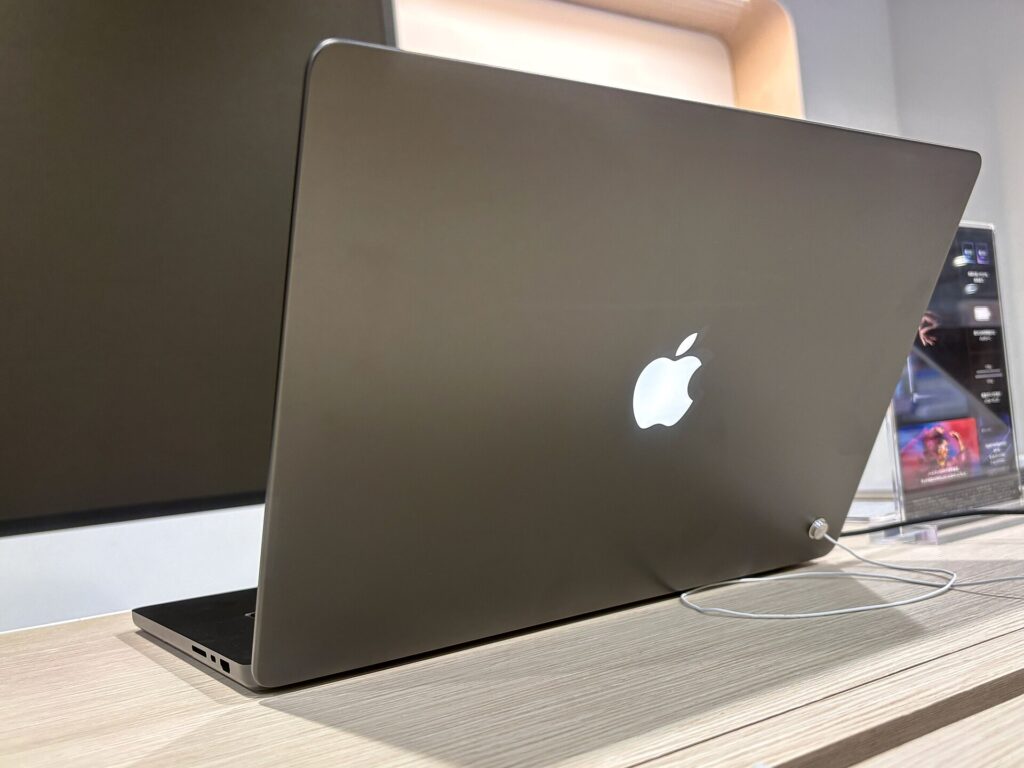
The 14-inch model is about half a millimeter thinner and weighs just over three pounds after shedding roughly half a pound. The 16-inch version trims almost a millimeter and drops 0.7 pounds to around four pounds total. The glowing Apple logo returns too.
The OLED panel delivers true blacks and no mini-LED bloom, with brightness that handles HDR well. It starts at $2,899. Bezels are thinner, and the 16-inch model measures 16.3 inches. A Dynamic Island replaces the notch for Siri AI and Live Activities.
Touch works like an iPhone or iPad—you can swipe pages, tap buttons, drag items, and pinch to zoom. macOS tweaks make menus expand more on touch and enlarge tiny resize controls. A sturdier hinge keeps the screen steadier, though some jiggle remains depending on where you tap.
Touch is not meant to replace the trackpad or keyboard. It feels fine for occasional use but unlikely to change daily workflows for most people. The machines still run the same M5 Pro and M5 Max chips as the prior mini-LED models.
Apple continues selling the older versions, so the PROLED carries a roughly $400 premium for the display, weight savings, and touch feature.
The Tea
The OLED screen and lighter frame look like the real draws here, while touch feels more like a bonus experiment than a must-have. At nearly three grand to start, buyers will need to decide if those upgrades justify skipping the cheaper mini-LED option still on sale.